MoViT
A journey through the rainforest, virtually.
A 3D Mobile Virtual Reality Tour of Panguil River Eco Park, Published Research, International Conference
My role
Project Lead, Lead Researcher, and Lead Developer, in a formal university-municipality partnership
Methods
User research across 3 groups · Framework-driven design (Krueger, Horan, Shao/Yu/Meng) · 3 navigation prototypes · Multi-group evaluation
Outcome
Rated 4.19/5 by 179 respondents: 139 Visitors, 30 Potential Visitors, 10 Staff
Published
Peer-reviewed by Springer; presented at Waseda University, Tokyo
A municipality's main source of income that almost nobody could find
- Panguil River Eco-Park is the primary income source for its municipality in Misamis Occidental, Philippines.
- It sits far from any major city, so a visit is a real commitment of time and travel cost.
- Photos and text told people what was there, but gave them no sense of what it felt like to be there.
- Without that feeling, potential visitors had nothing to weigh the journey against.
Let people feel the park before they travel to it
The municipality wanted to grow tourism. My brief was to build a virtual 3D environment that delivered the experience of being inside the eco-park, so the decision to visit was based on something felt rather than something read.
Success looked like: visitors, potential visitors, and park staff all rating the experience as a credible stand-in for the real place, measured on a 5-point Likert scale during on-site testing.
4.19/5
Overall Usability
Across all three respondent groups
179
Respondents Tested
139 visitors, 30 potential, 10 staff
92%
iOS Tablet Share
Why iPad was the platform (2014)
Ch. 7
Published by Springer
Presented at Waseda University, Tokyo
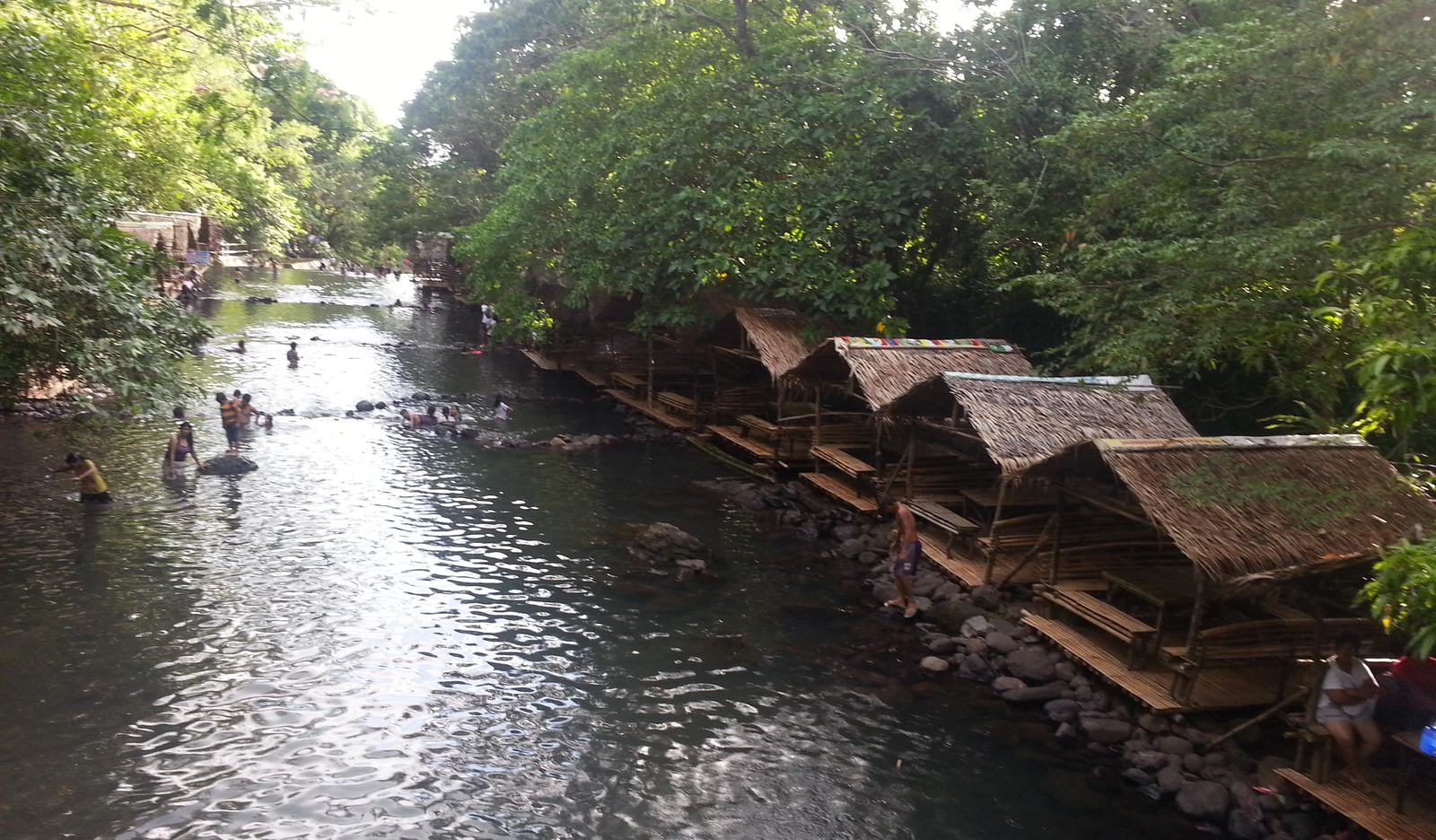
Hidden deep in the Philippines
Panguil River Eco-Park sits in a remote Philippine municipality, breathtaking, but invisible to the world. Potential visitors had no way to experience its beauty before making the journey.
Location
Remote Philippine municipality
Published in
e-Consumers in the Era of New Tourism (Springer)
Presented at
Waseda University, Tokyo
Platform
iOS iPad (3D Mobile App)
Through the Rainforest
Structured as Empathize → Define → Ideate → Prototype → Test & Outcome. Every design decision grounded in research, every outcome measured.
Entering the Forest
Understanding who couldn't visit, and why that mattered
Panguil River Eco-Park is a hidden gem in a remote Philippine municipality. Its beauty is unknown to the world: limited digital presence, no immersive experience, and no way for potential visitors to "feel" the park before making the journey. Eco-tourism is built on discovery, and this park had no way to be discovered. I grounded the project in understanding three distinct user groups: Visitors already at the park, Potential Visitors who had never been, and Staff who knew it intimately. Each had fundamentally different needs, and designing for all three simultaneously became the central design constraint.
The core tension: extraordinary physical experience, zero digital representation.
Following the Sounds
Naming the real problem: discovery, not information
The problem wasn't that people lacked facts about the park. It was that they couldn't feel it. No amount of text or photography could replicate the decision-triggering experience of being there. The design challenge was clear: build an experience that gave potential visitors the feeling of being inside the eco-park before they ever arrived. I chose iPad as the platform after data showed it represented 92% of iOS tablet users in the Philippines at the time.
Platform selection was a research decision. The problem statement shaped every constraint that followed.
Drawing the Map
Grounded in Krueger's Three I's: Immersion, Interaction, Imagination
I structured the ideation across three development phases: Behavior Module Design (defining how users navigate and interact), Multimedia Creation (3D modelling, sound design, and visual assets), and Model Construction (assembling the virtual environment). The guiding framework was Krueger's Three I's (Immersion, Interaction, and Imagination), which shaped every creative and architectural decision. Every concept was evaluated against Horan's VR Model before moving forward.
A design framework without a user problem is decoration. Krueger's model gave the ideation principled direction.
Crossing the River
The virtual environment takes shape
Building a place people could believe in raised five design challenges, each with its own tradeoff:
- Navigation freedom: too restrictive and the app is a slideshow, passive and forgettable; too open and users get disoriented and lose the sense of place. I prototyped three approaches, a fully guided path, completely free exploration, and finally navigational waypoints that surface points of interest contextually without interrupting autonomy.
- Visual fidelity against device limits: the 3D environment had to read as the real rainforest while still running smoothly on a 2014 iPad, which meant deciding where detail mattered and where it could be implied.
- Orientation and wayfinding: in a dense forest with few landmarks, users needed to know where they were and what they had already seen, without a map overlay breaking immersion.
- Interaction comfort: sustained handheld 3D navigation causes fatigue and motion discomfort, so movement speed and camera behaviour were tuned for longer sessions.
- Representing scale and sound: waterfalls and canopy height carry the emotional weight of the park, and both are difficult to convey on a tablet screen.
Every decision was tested against Horan's VR model criteria: presence, interaction quality, and user comfort.
Three navigation prototypes tested before landing on waypoints. Each iteration brought us closer to the right balance.
Inside the Environment
Every screen is a design decision made visible
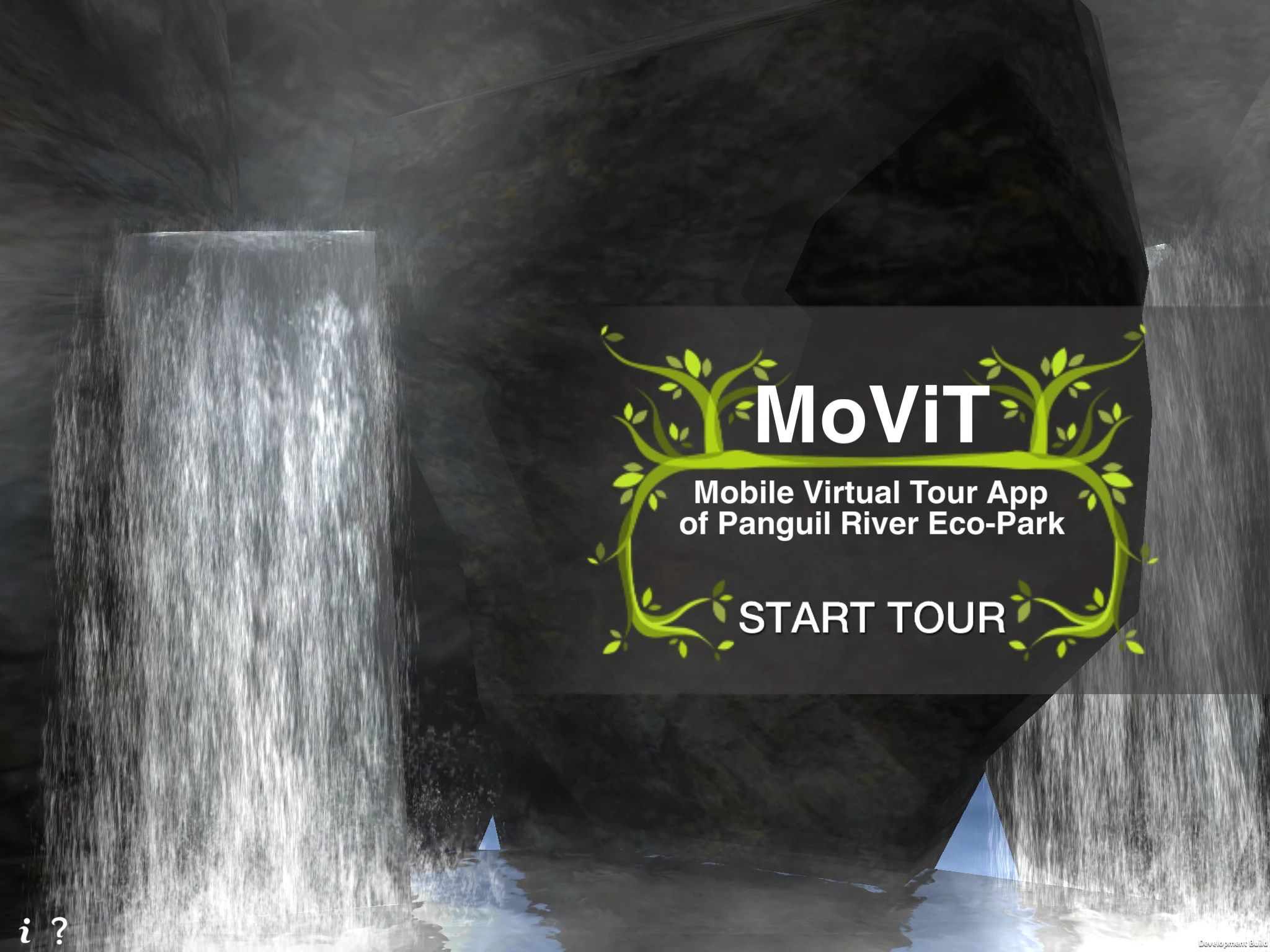
Entry experience
The splash screen sets tone before the user takes a single step; immersion begins at launch.
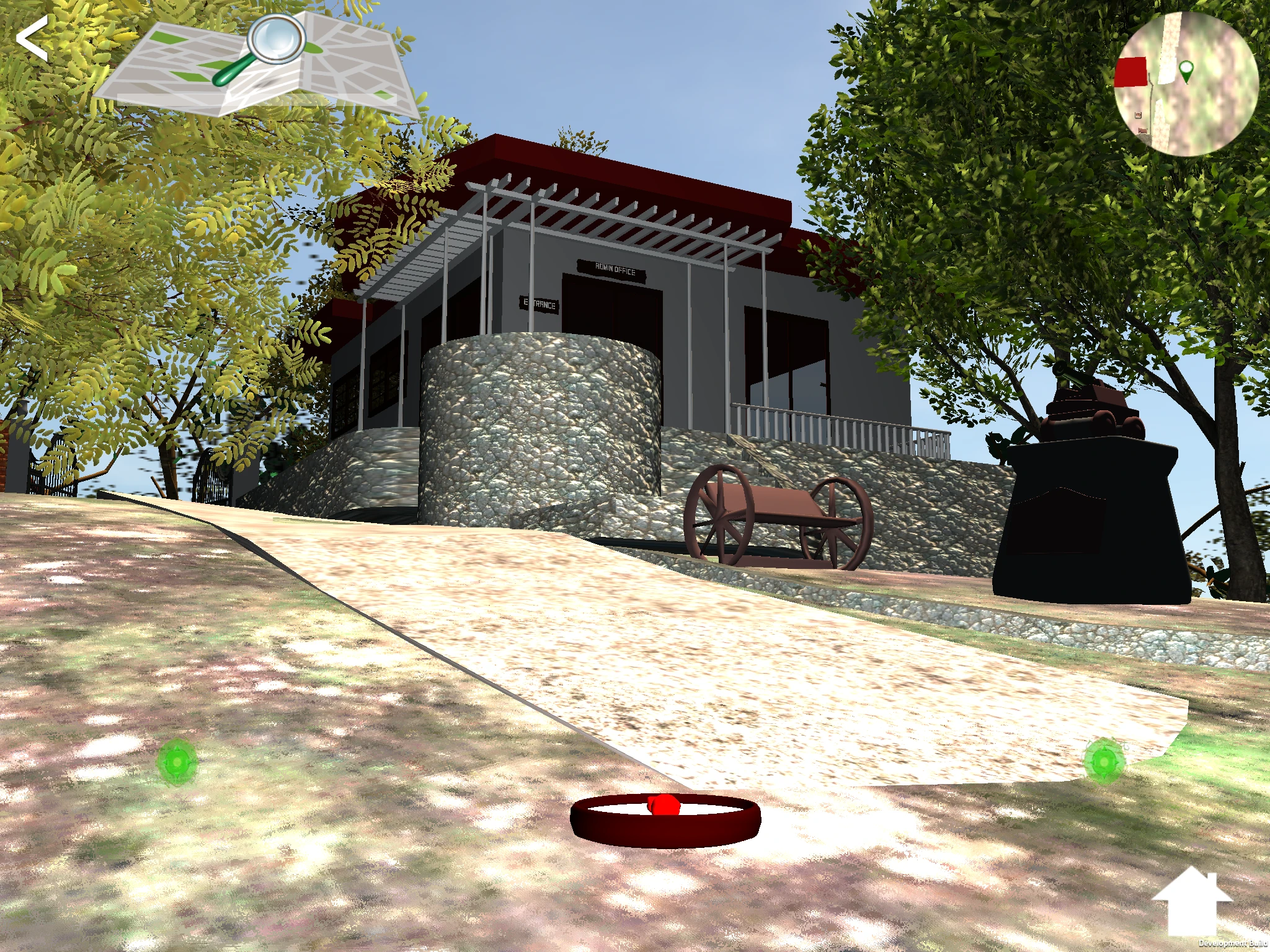
Navigation system
Compass (bottom center), mini-map (top right), and green waypoints give orientation without interrupting exploration. Every UI element was a deliberate decision to balance freedom with guidance.
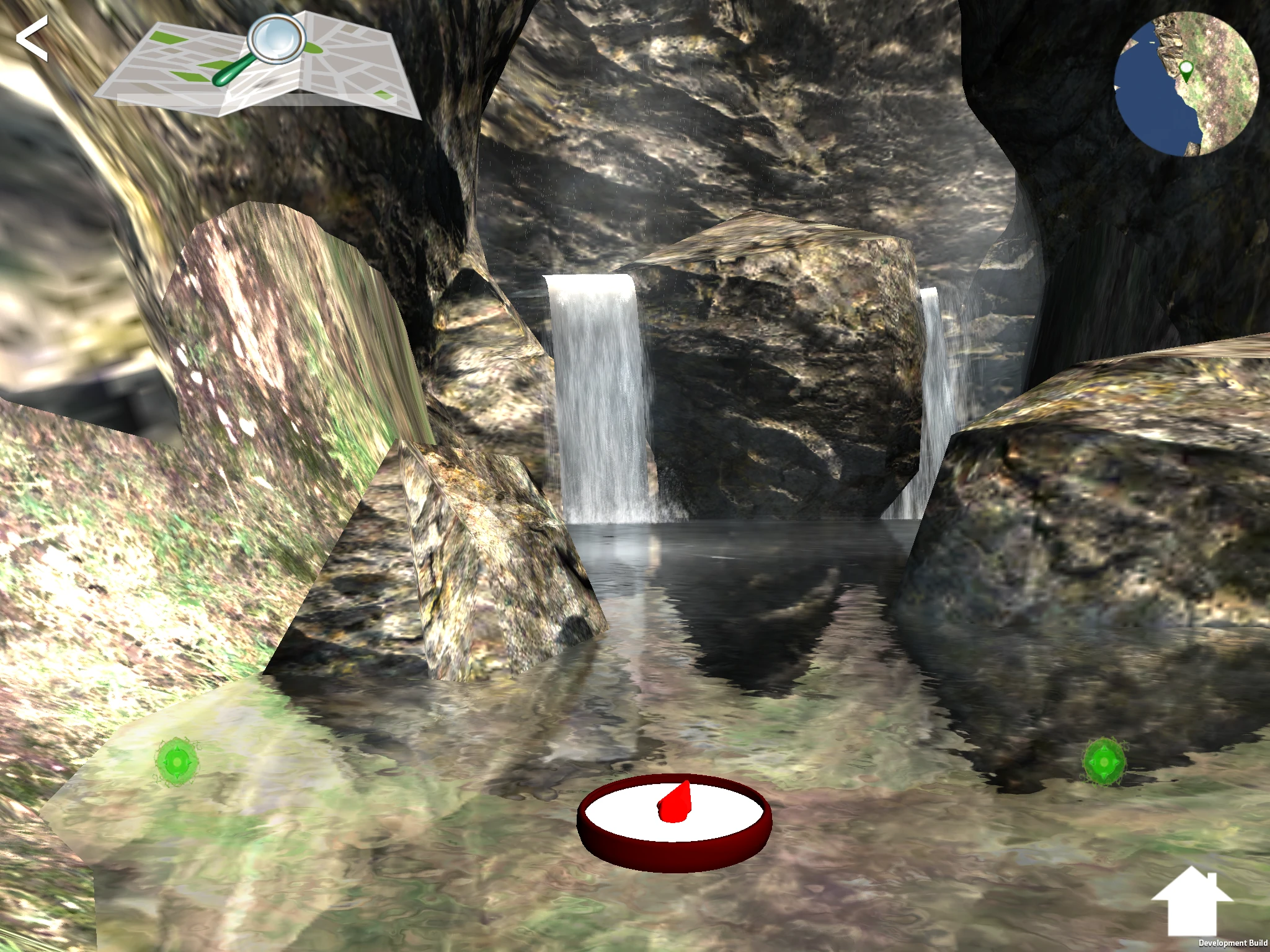
Immersion quality
The Ambon Ambon Falls, one of the park’s signature locations. Validated against Krueger’s Immersion criterion: users should feel physically present.
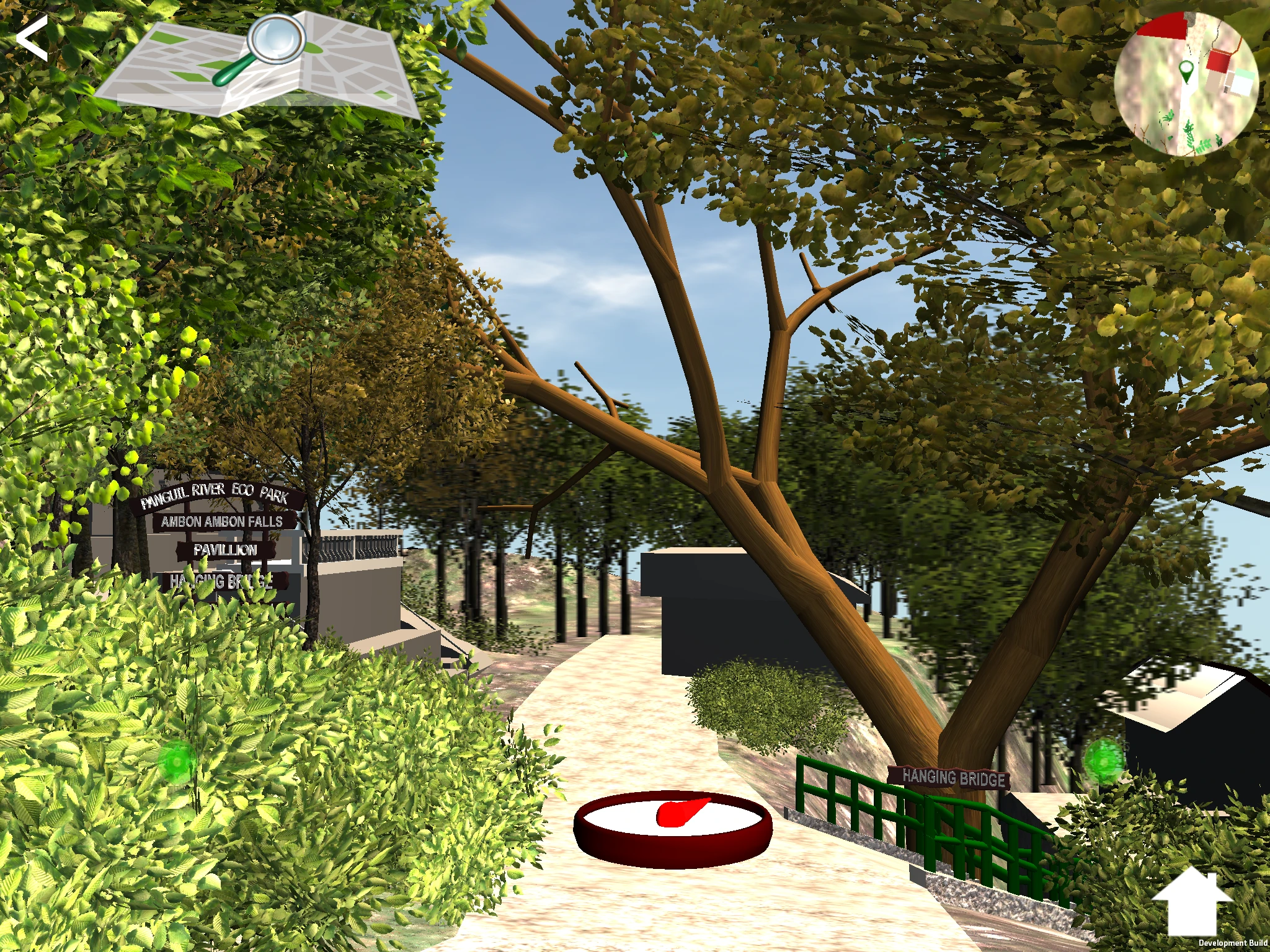
Wayfinding in context
In-environment directional signs (Ambon Ambon Falls, Pavilion, Hanging Bridge) surface orientation naturally, no UI overlay required. The park guides you the way the real park would.
Reading the Terrain
Every test revealed something the framework couldn't predict
Testing with three distinct user groups (Visitors, Potential Visitors, and Staff) revealed that success criteria were fundamentally different for each. Visitors evaluated immersion. Potential Visitors evaluated whether the app made them want to visit in real life. Staff evaluated representational accuracy. Designing for all three simultaneously required building a system flexible enough to serve different goals without fragmenting the experience. If I were building MoViT today, I would add a fourth user group: people with mobility limitations for whom virtual eco-tourism isn't a preview. It's the only option. That insight emerged too late in the process to act on, and it remains the most important thing this project taught me about who we design for.
Designing for multiple success criteria simultaneously is itself a design constraint, one that forces better systems thinking.
The Magnificent Falls
Published. International. Recognized.
MoViT received an overall usability rating of 4.19 out of 5 across all respondent groups. It was presented at the 3rd International Conference on Hospitality, Leisure, Sports and Tourism at Waseda University, Tokyo, and published as Chapter 7 in Springer's e-Consumers in the Era of New Tourism. The work was also featured in The Age newspaper. A first-of-its-kind VR eco-tourism application for the region, validated by academic peers on the international stage.
Real vs 3D Environment
Each landmark was reconstructed in 3D from on-site photography. These side-by-side comparisons show how closely the virtual environment mirrors reality.
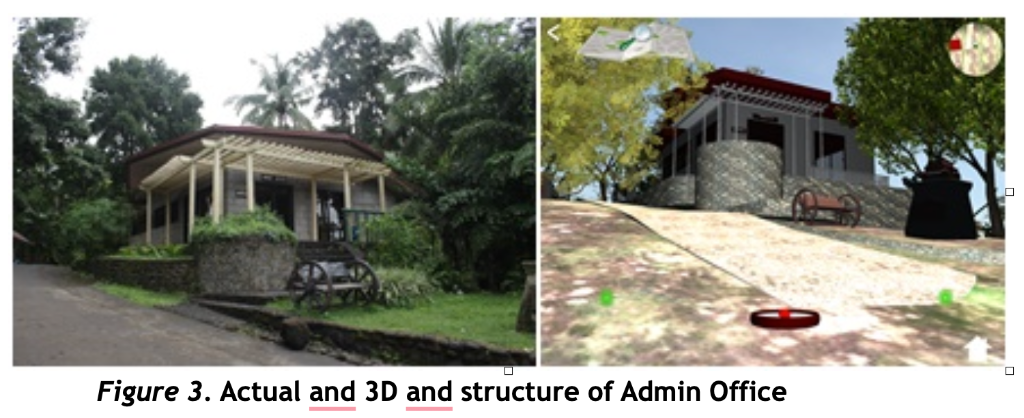
Actual and 3D structure of the Admin Office
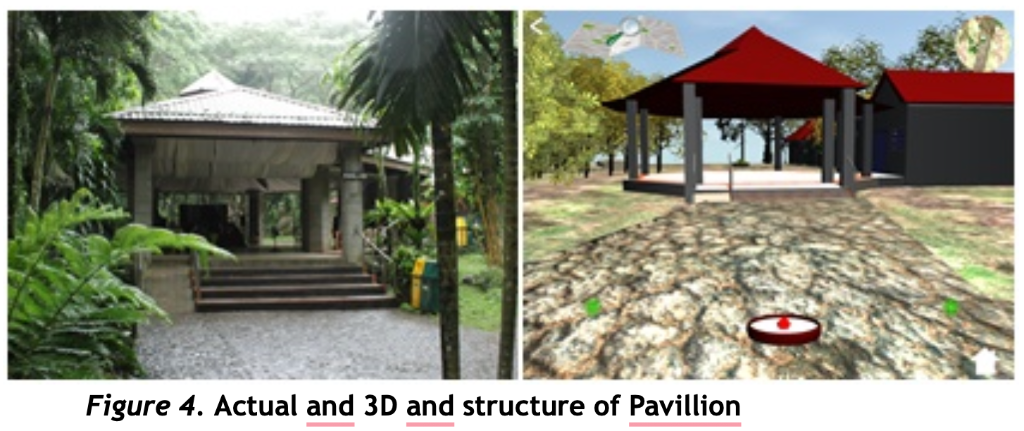
Actual and 3D structure of the Pavillion
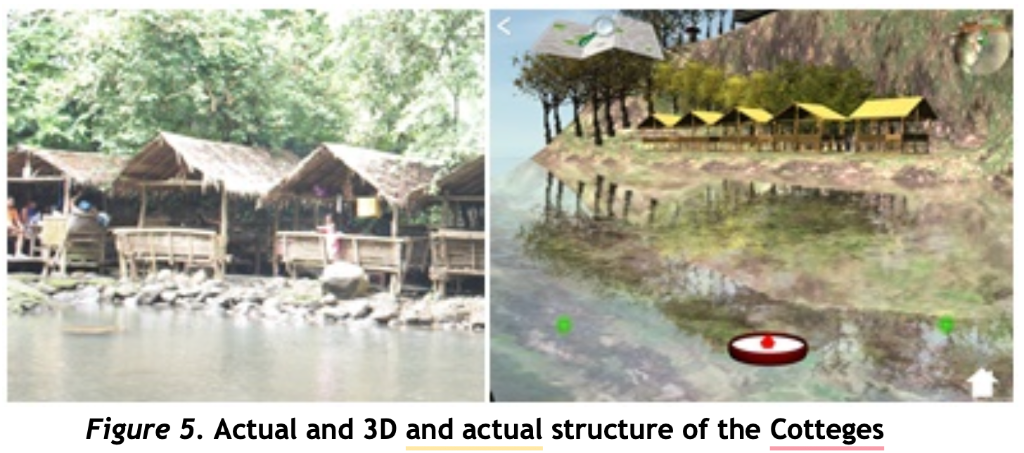
Actual and 3D structure of the Cottages
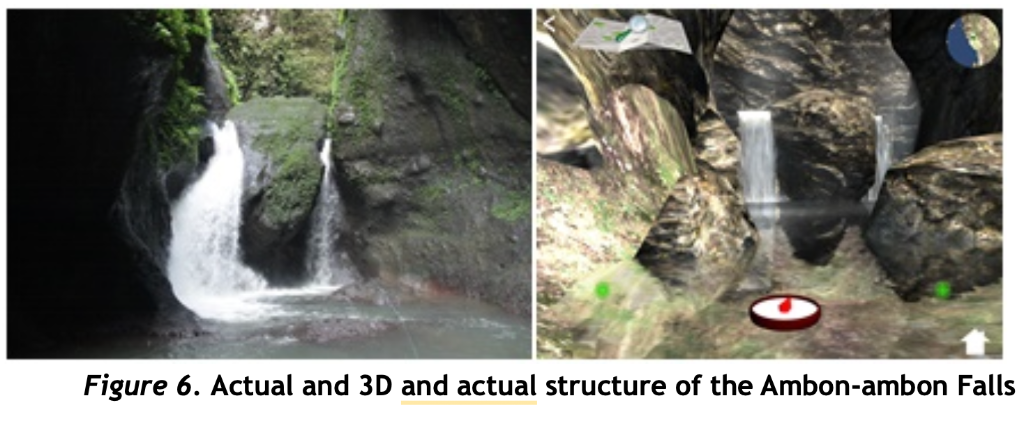
Actual and 3D structure of the Ambon-ambon Falls
Overall Rating
Measured using the Likert scale across three respondent groups (139 Visitors, 30 Potential Visitors, and 10 Staff), tested on-site at Panguil River Eco-Park on February 25, 2014.
Overall Application Rating
"The highest rating indicates a high level of usability and user satisfaction with the virtual environment."
Visitors
n = 139
Local and non-local visitors present at the eco-park during testing.
Potential Visitors
n = 30
People not in the vicinity of the eco-park, the key target audience for virtual tourism.
Staff
n = 10
Eco-park staff who evaluated the accuracy and representation of the virtual environment.
Likert Scale Methodology
The study used a 5-point Likert scale to measure usability across dimensions including immersion, navigation, visual fidelity, and overall experience. Results were collected from 3 respondent groups during on-site testing at Panguil River Eco-Park, Misamis Occidental, Philippines.
Three Frameworks, Three Jobs
Before any design work began, I grounded the project in three peer-reviewed academic frameworks, so the work stayed accountable to a standard outside my own judgement.
01
Feel
Krueger
Three I's of VR
02
Measure
Horan
Nine-Factor Model
03
Build
Shao, Yu & Meng
System Design
The Three I's of VR
Krueger's philosophy guided how users should emotionally connect with the virtual environment. Imagination was the primary design target.
Immersion
Users feel physically present in the Panguil River Eco-Park, surrounded by its sounds, sights and atmosphere.
Interaction
Freely navigate the 3D environment. Follow guided paths or explore on your own terms, the park responds to you.
Imagination
The virtual environment sparks curiosity and desire to visit in real life, the ultimate goal of eco-tourism design.
Horan's Nine-Factor VR Model
What to measure. Nine dimensions used as a checklist to validate every build decision against an external standard rather than personal taste. Each build was checked against these factors before it went to users, which is what let the later Likert testing measure something the design had already been held to.
- Attractiveness
- Navigation
- Sensory simulation
- Spatial fidelity
- Realism
- Interactivity
- Orientation
- Responsiveness
- Overall experience
Nine axes, each scored on a 5-point scale.
Shao, Yu, and Meng's System Design Framework
How to build it. An eight-stage development lifecycle that governed the production sequence, so design intent survived translation into a working system.
Story conception → System operation
Following a defined lifecycle mattered because this was a one-shot capstone build: there was no second production cycle to fix a sequencing mistake.